
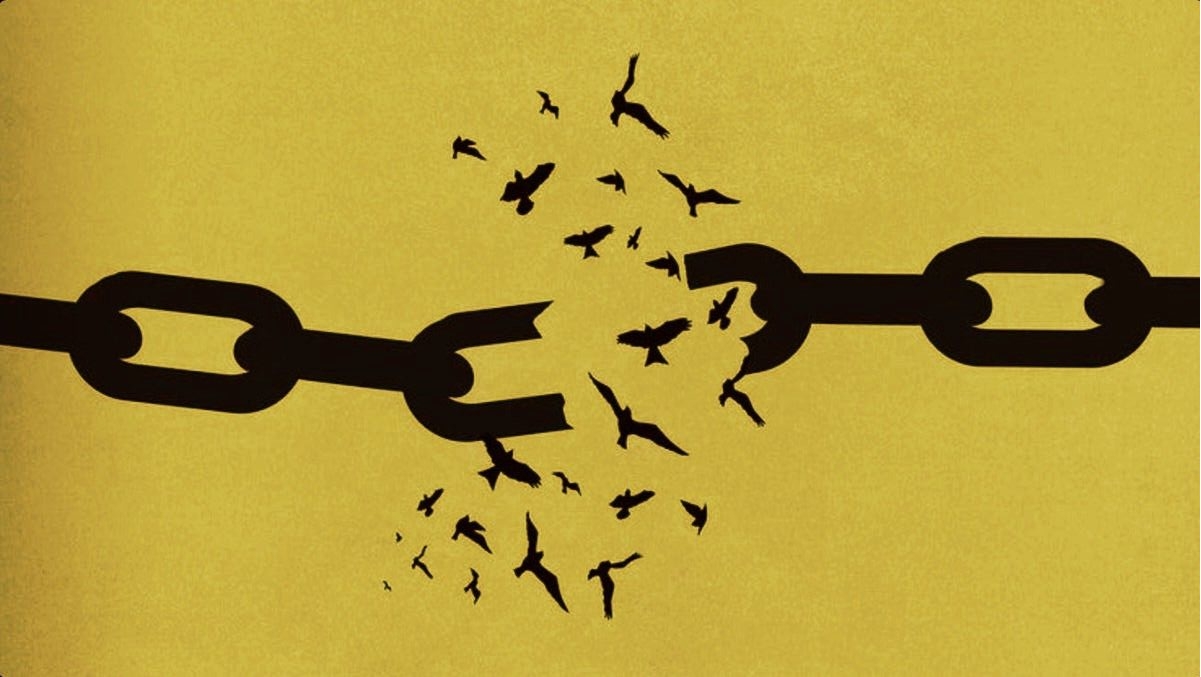
In 2025, the level of repression did not decrease. Pressure in prisons and penal colonies continues: prisoners are regularly placed in solitary confinement, deprived of visits and parcels, and subjected to other forms of punishment. Despite two prisoner exchanges in return for lifting sanctions, the overall trajectory of the repressive policy remains unchanged. New criminal cases are being initiated, and those already incarcerated continue to face systemic pressure.
Extension of Sentences for “Disobeying Prison Administration”
In 2025, 8 criminal cases were initiated against anarchists and antifascists under Article 411 of the Criminal Code (“willful disobedience to the prison administration’s demands”).
Nikita Emelyanov – received an additional 1 year of imprisonment. He was sentenced in 2020 to 4 years and was supposed to be released in 2024, but his sentence was repeatedly extended under Article 411.
Aleksey Golovko – +6 months.
Aleksandr Kozlyanko – +1.5 years.
Pavel Shpetny – +2 years.
Evgeny Rubashko – +1 year.
Aleksandr Frantskevich – sentence unknown.
Sergey Romanov – +1.5 years. Sergey was arrested in 2020 and sentenced in 2021 to 20 years of imprisonment. Due to continuous trials under Article 411, his total sentence now amounts to 24 years and 5 months.
Artem Solovey – +1 year.
Aleksandr Belov – + 6 months.
Tightening of Conditions
In June, Dmitry Rezanovich was sentenced to nearly 20 years in prison and had his regime tightened, being transferred to a high-security prison for 3 years. In October, it became known that Igor Olinevich was in solitary confinement in Correctional Colony No. 20. After serving his prison sentence in August, he was transferred to a penal colony, but it took two months to find out where exactly he was held. Hiding the whereabouts of political prisoners remains one of the forms of pressure on them and their families. After two months in solitary confinement, Igor was transferred to a penal colony’s strict regime (PKT). Later, it became known that upon arrival at the colony, he went on a hunger strike for a month.
Pressure on Relatives
On July 19, 2024, Tatiana Frantskevich, the mother of political prisoner Aleksandr Frantskevich, was arrested along with her sister Natalia Lobachevich. Both were accused of aiding extremist activities (Article 361-4 of the Criminal Code). Tatiana Frantskevich was sentenced to 3 years and 3 months of imprisonment, and Natalia Lobachevich was sentenced to 3 years of imprisonment.
New Sentences
In December, it became known that sentences were handed down to the participants of the “Black Nightingales” group:
Aliaksandra Pulinovich – 10 years and 3 months.
Trafim Barysau – 12 years.
Siarhei Zhyhaliou – 12 years.
Dzmitry Zakharoshka – 10.5 years.
Maria Misiuk – 13 years.
Releases
On April 18, after more than 4 years in prison, Andrey Chepyuk was released. On June 21, together with a group of political prisoners from other countries, Akihiro Gaevsky-Khanada was released and deported from Belarus. On September 11, Nikolai Dedok was released and deported from Belarus along with 50 other political prisoners. Nikolai was supposed to be released on April 4, 2025, but a new case was initiated against him for leading the organization “Autonomous Action Belarus,” which was preliminarily recognized as part of a criminal organization. He faced up to 13 years in prison. On November 22, Maria Misiuk, who had been sentenced to 13 years for “terrorism” as a member of the “Black Nightingales” group, was “pardoned” and deported to Ukraine. At the time of her arrest, she was 16 years old.
It’s heartbreaking to see that the repressive policies in Belarus continue unabated in 2025, especially with reports of prisoners facing solitary confinement and harsh treatment. The ongoing criminal cases against activists are deeply concerning. relevant link
It’s deeply alarming to read about the ongoing repression faced by Belarusian anarchists and antifascists in 2025, particularly the troubling reports of solitary confinement and the lack of basic rights for prisoners. The continuation of new criminal cases only amplifies the desperate situation for these activists. this resource
The continued use of solitary confinement as a punishment for prisoners in Belarus is both alarming and inhumane. It’s disheartening to see the state employing such harsh tactics while also initiating new criminal cases, suggesting a relentless crackdown on dissent. This pattern of repression highlights a dire need for greater awareness and action to support those affected. interesting find